Product Description
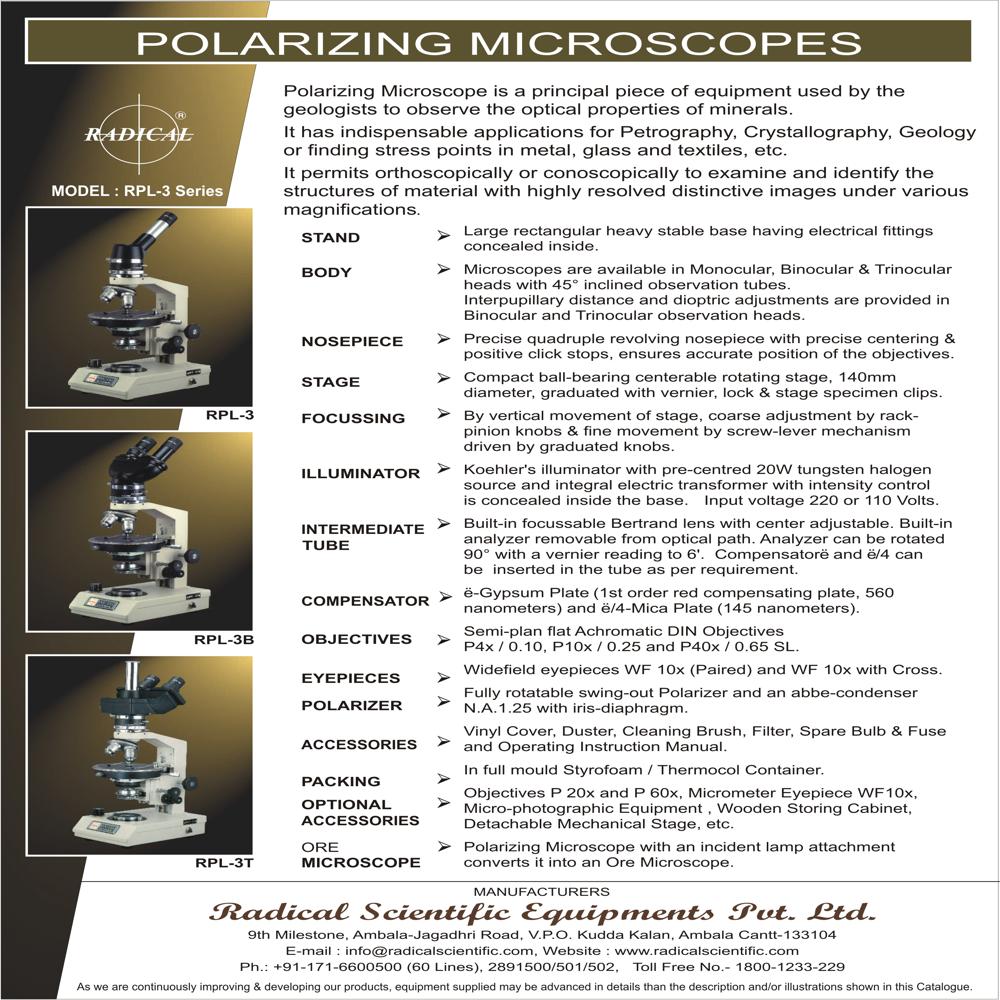
Polarizing Microscope is a principal piece of equipment used by the
geologists to observe the optical properties of minerals.
It has indispensable applications for Petrography, Crystallography, Geology
or finding stress points in metal, glass and textiles, etc.
It permits orthoscopically or conoscopically to examine and identify the
structures of material with highly resolved distinctive images under various magnifications.
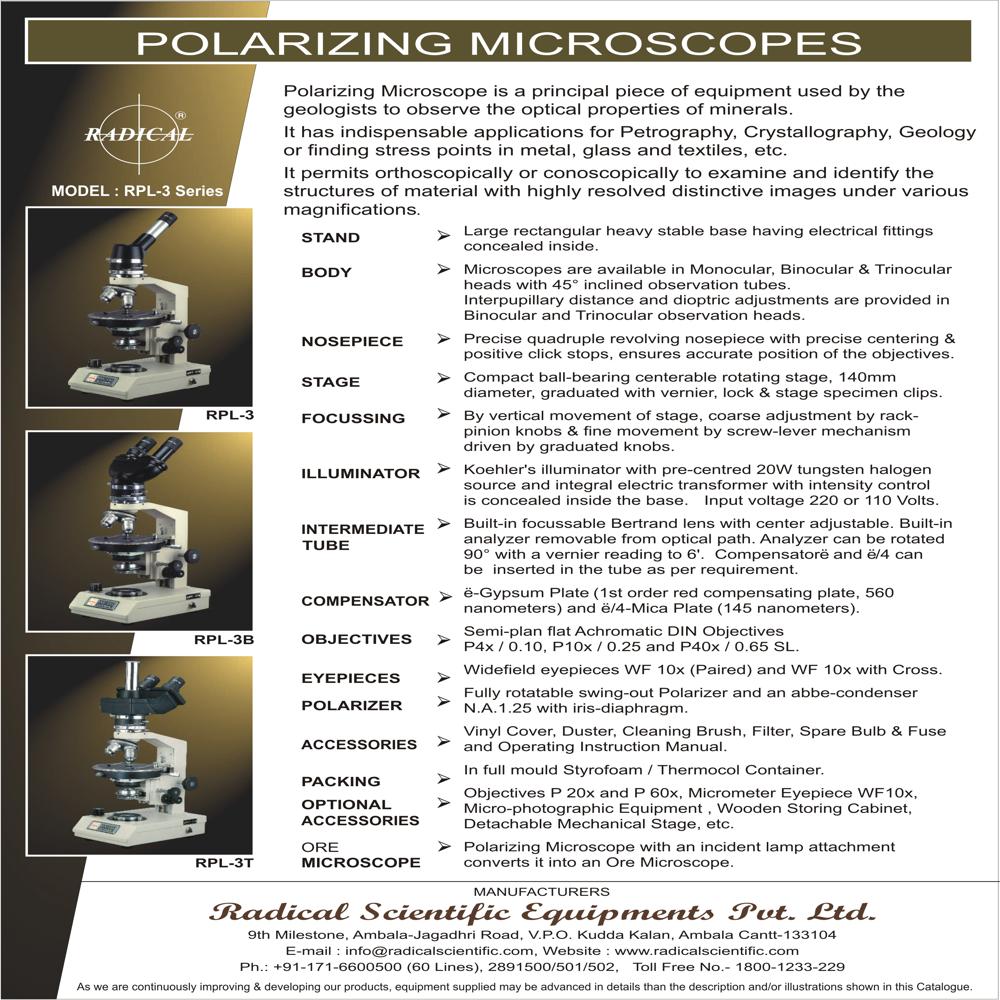
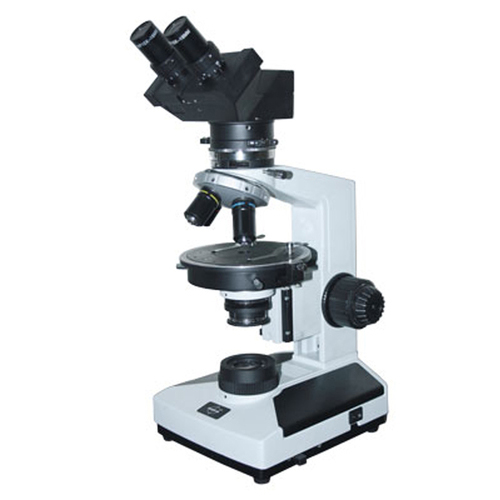
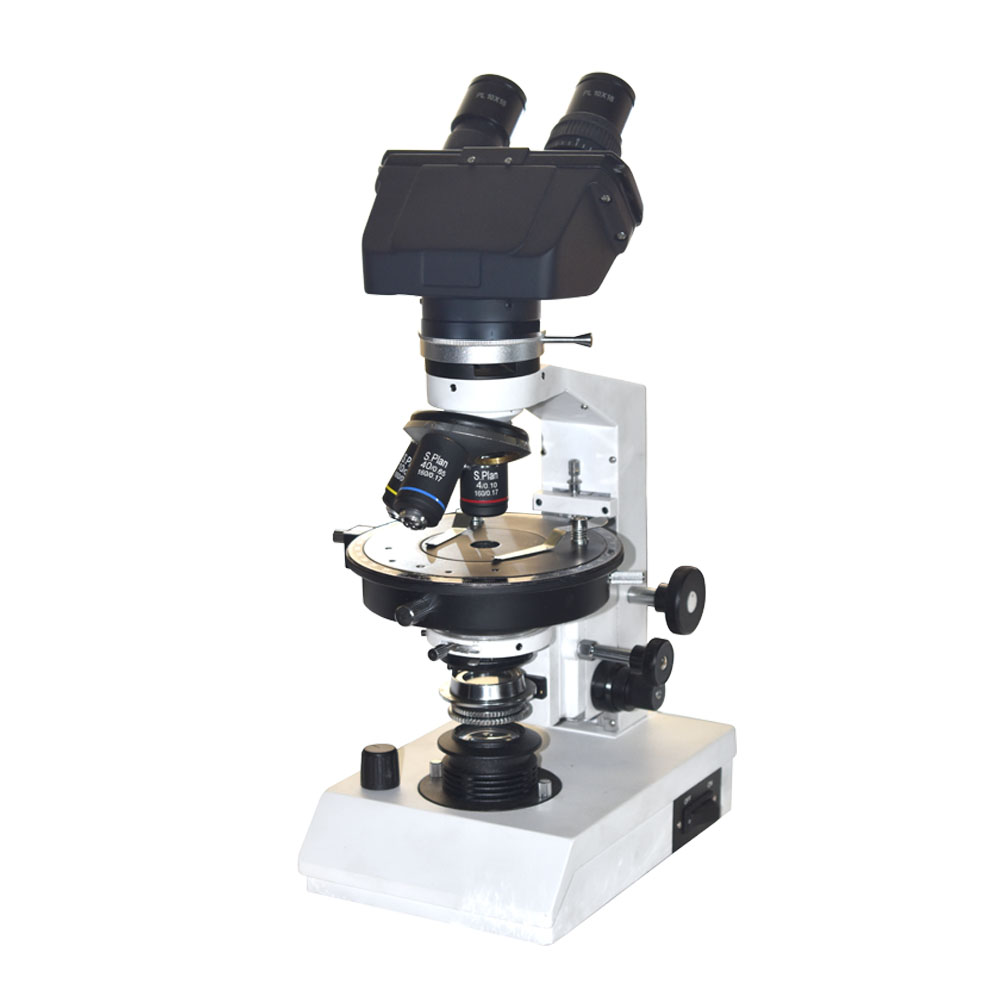
Stage -Compact ball-bearing rotating stage 140 mm diameter graduated with vernier lock and stage specimen clips.
Focussing -By vertical movement of stage coarse adjustment by rack pinion knobs and fine movement by screw-lever mechanism driven by screw-lever mechanism driven by graduated knobs.
Intermediate Tube -Built-in focussable Bertrand lens with center adjustable. Built-in analyzer removable from optical path. Analyzer can be rotated 90 deg with a vernier reading to 6 inch.
Eyepieces -Widefield Eyepieces WF-10x (Paired) and WF 10x with Cross
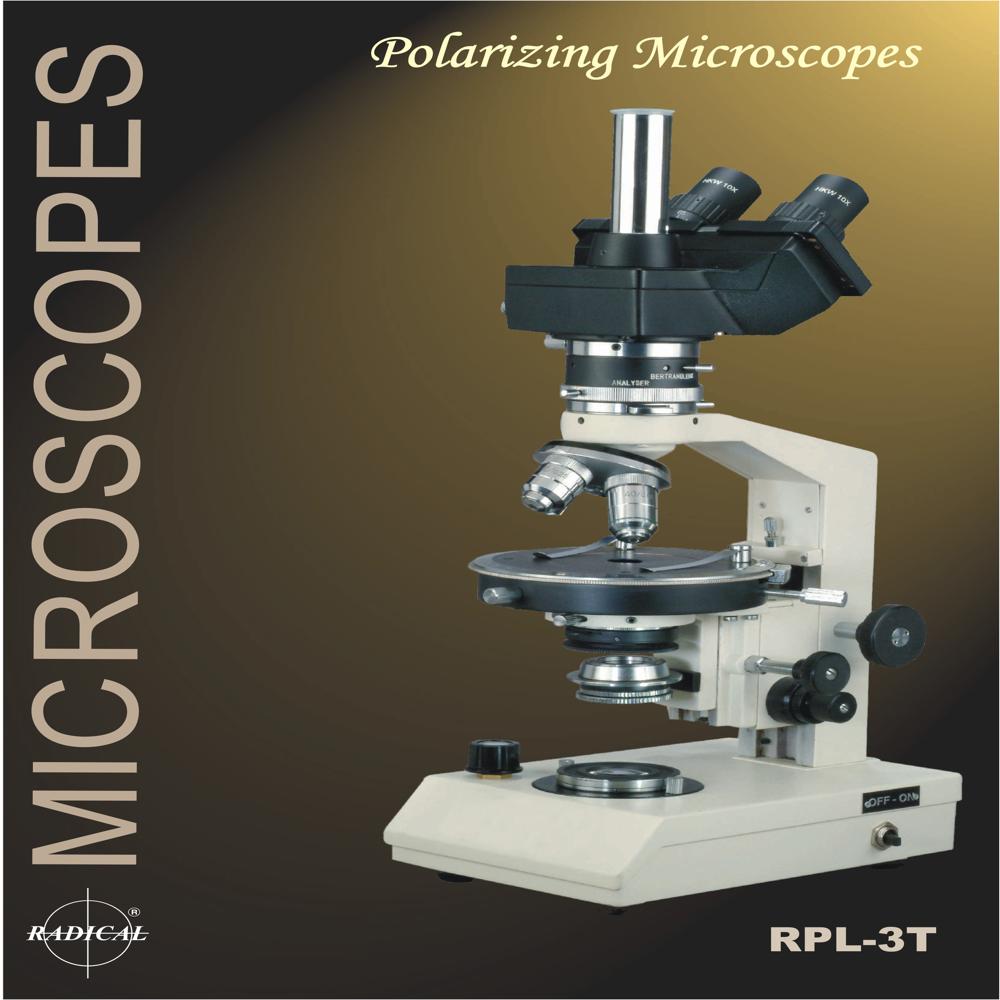
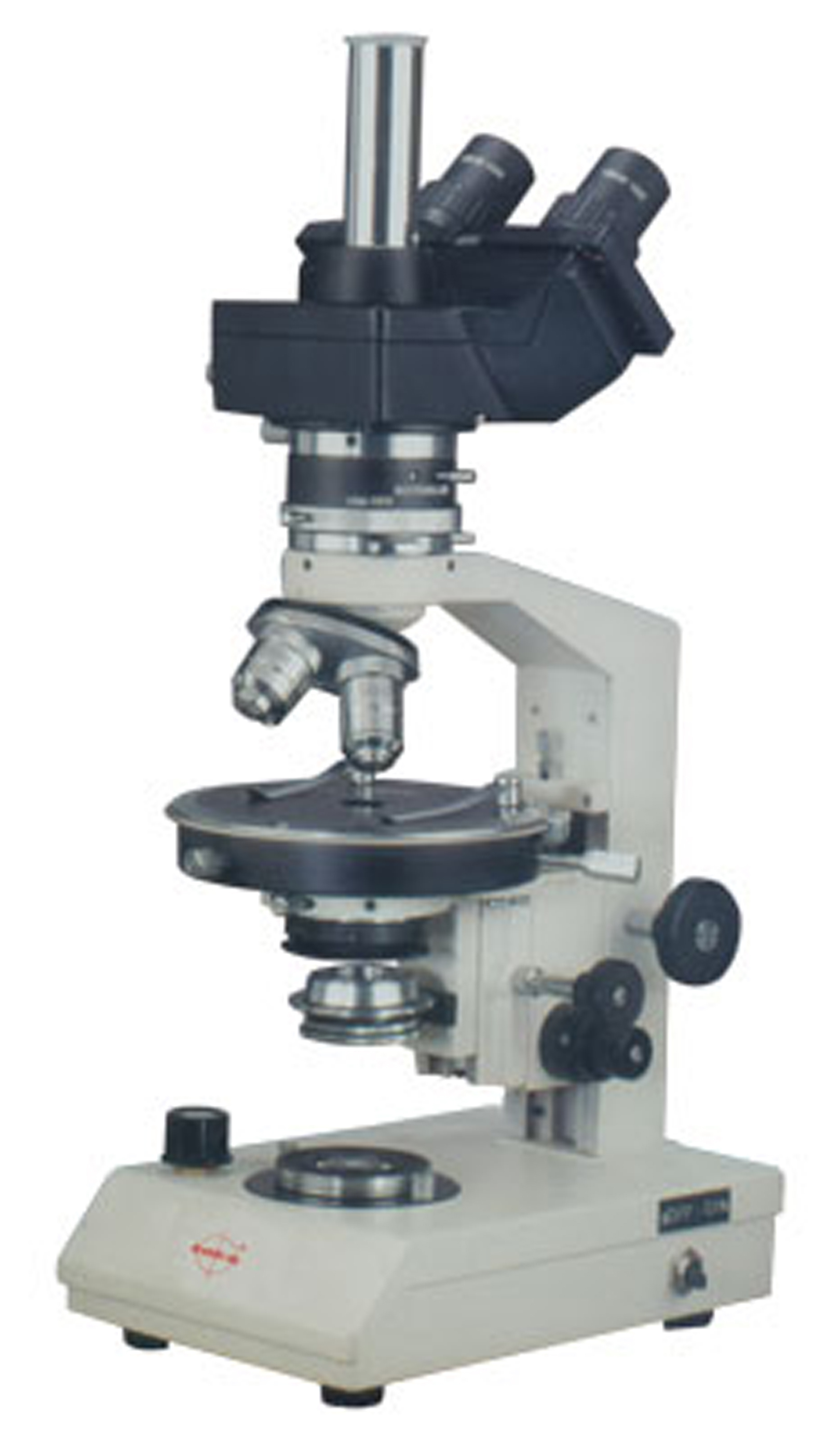
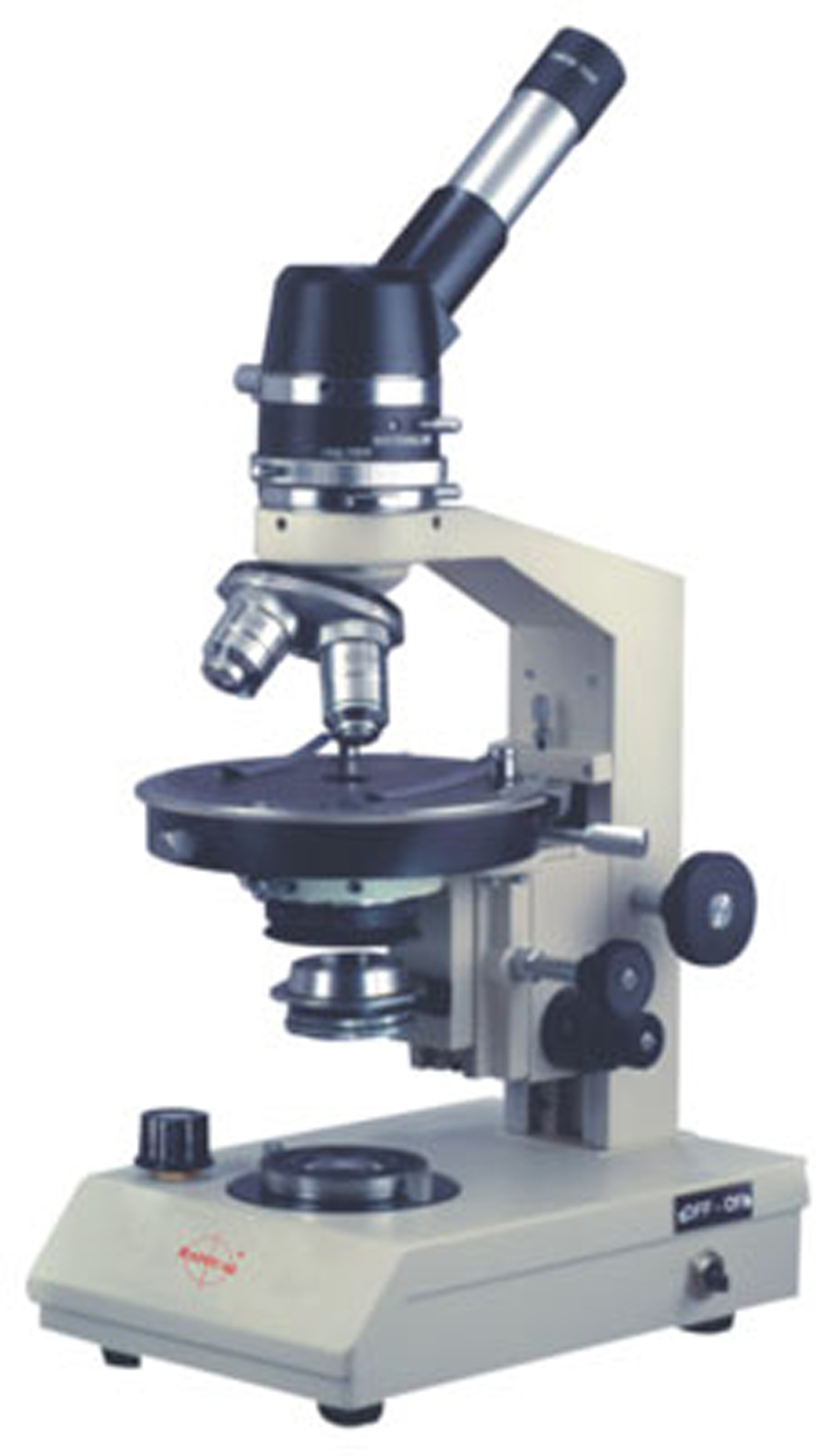
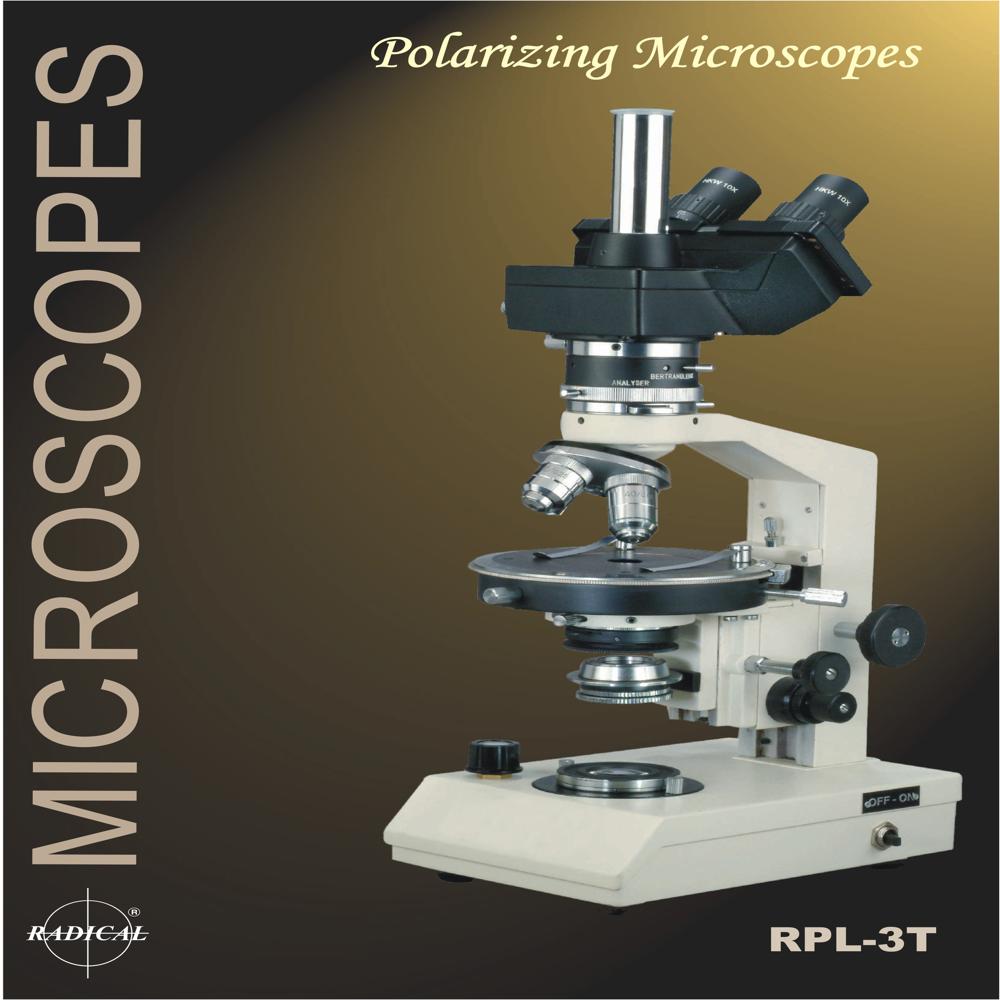
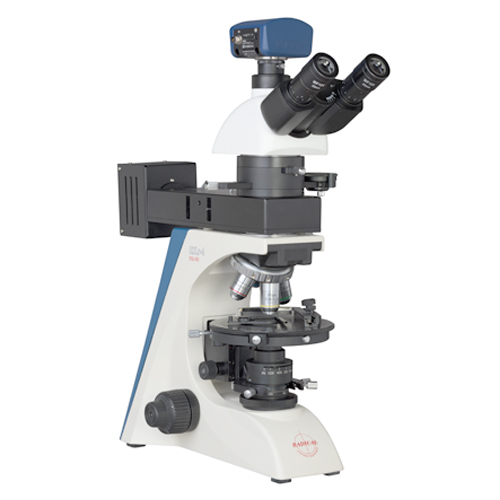
Optimized for Geological StudiesThe RPL-3T Trinocular Polarising Microscope is tailored for examining rocks and minerals, combining a WF 10x eyepiece and a 40x objective for accurate, high-clarity observation at 400X magnification. Its sturdy die-cast build and halogen light source make it suitable for extended and detailed laboratory use.
Trinocular Versatility and Manual OperationWith a trinocular viewing head, the RPL-3T allows for comfortable, versatile observations. Its manual operation offers precise focus adjustments, supporting effortless switching between users or samples. This design is favored by laboratories prioritizing hands-on examination over digital integration.
Built for Reliability and Ease of UseWeighted at 10 kg and constructed from durable materials, the RPL-3T provides substantial stability during specimen study. The halogen illumination ensures even lighting, making it easier to identify mineralogical structures and rock formations, facilitating accurate research outcomes.
FAQ's of Trinocular Polarising Microscope RPL-3T:
Q: How is the Trinocular Polarising Microscope RPL-3T used for rock and mineral studies?
A: The RPL-3T microscope is designed for manual examination of thin sections or samples of rocks and minerals, enabling clear visual analysis through high-quality optics and halogen illumination. Its trinocular head offers ergonomic viewing and allows connection with a camera (where available) for demonstration or documentation.
Q: What are the main benefits of using the RPL-3T in geological research?
A: This microscope's robust build, 400X magnification, and superior halogen lighting deliver precise imaging of mineral structures. Its reliability and ease of operation make it ideal for teaching, laboratory work, and professional geological analysis.
Q: When should you choose a trinocular polarising microscope like the RPL-3T?
A: Select the RPL-3T when you require detailed, manual observation of rock and mineral specimens, especially where demonstration through a third port is beneficial, but digital imaging is not necessary. It's well-suited for research, education, and laboratory work in geology.
Q: Where is the best environment to use the RPL-3T microscope?
A: The RPL-3T performs best in stable laboratory or classroom settings where stable electricity (6 volt, 20 watt) and careful specimen handling are available. Its 10 kg weight ensures it remains steady even during extended sessions.
Q: What is the operating process for this microscope?
A: To operate, simply place your sample on the stage, adjust focus manually using the coarse and fine focusing knobs, and illuminate with the built-in halogen lamp. The trinocular tube enables comfortable viewing or the addition of photographic accessories for demonstration, though built-in digital capture is not included.
Q: How does the RPL-3T's halogen illumination enhance observation?
A: Halogen illumination provides a steady and bright light source that brings out fine details and color differences in geological samples, enabling more accurate identification of minerals and rock textures.



 English
 Spanish
 French
 German
 Italian
 Chinese (Simplified)
 Japanese
 Korean
 Arabic
 Portuguese
 08045479132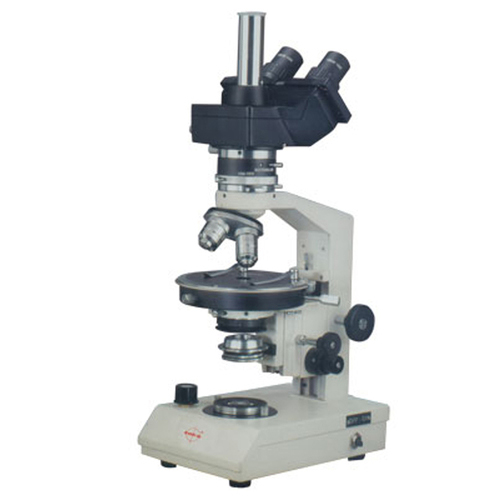



 Send Inquiry

 Send Inquiry
 Send SMS
