Product Description
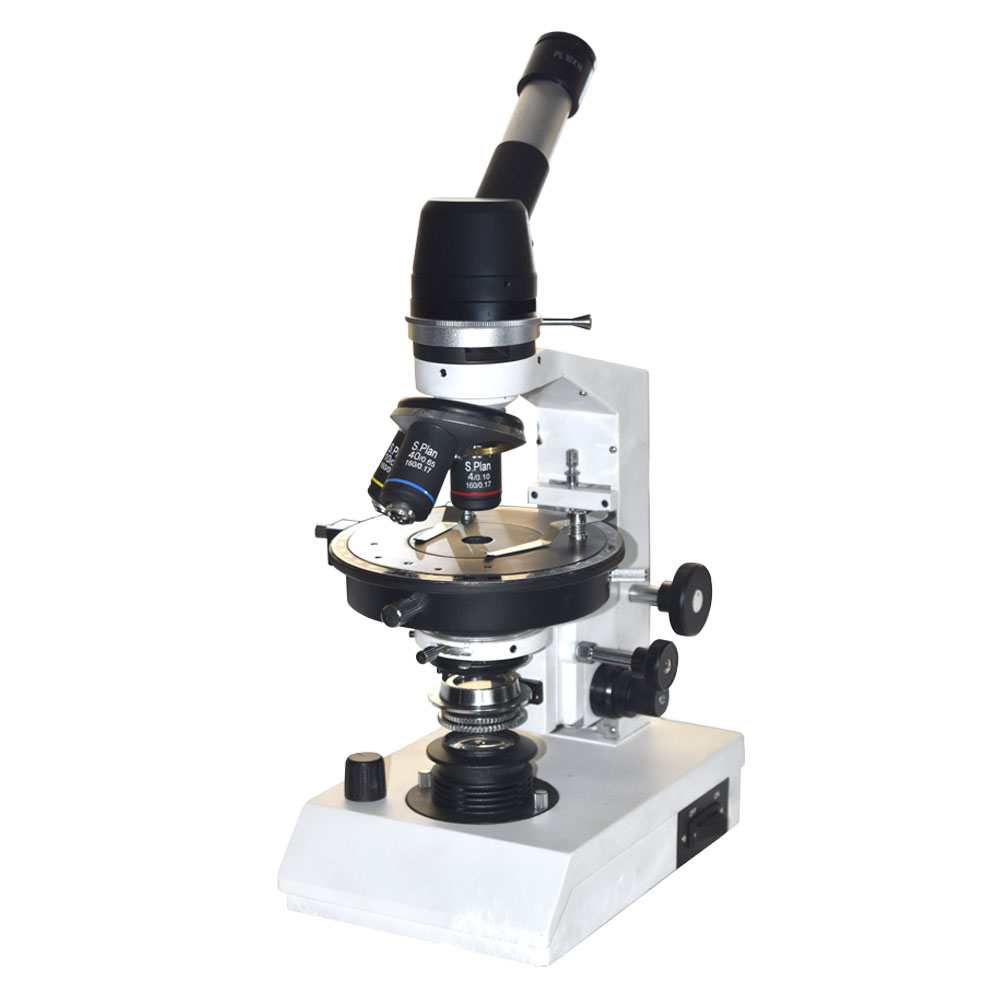
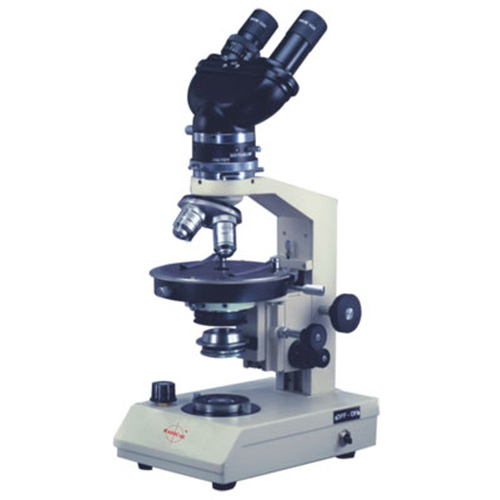
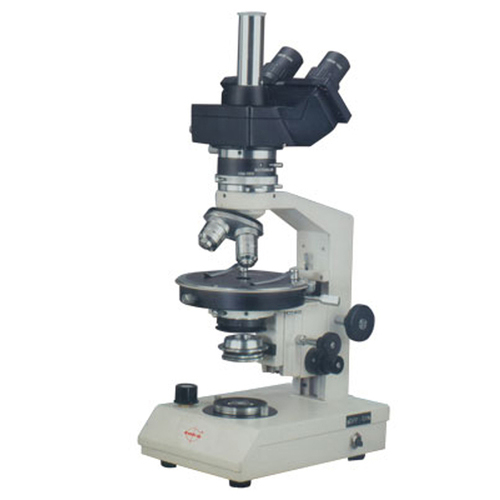
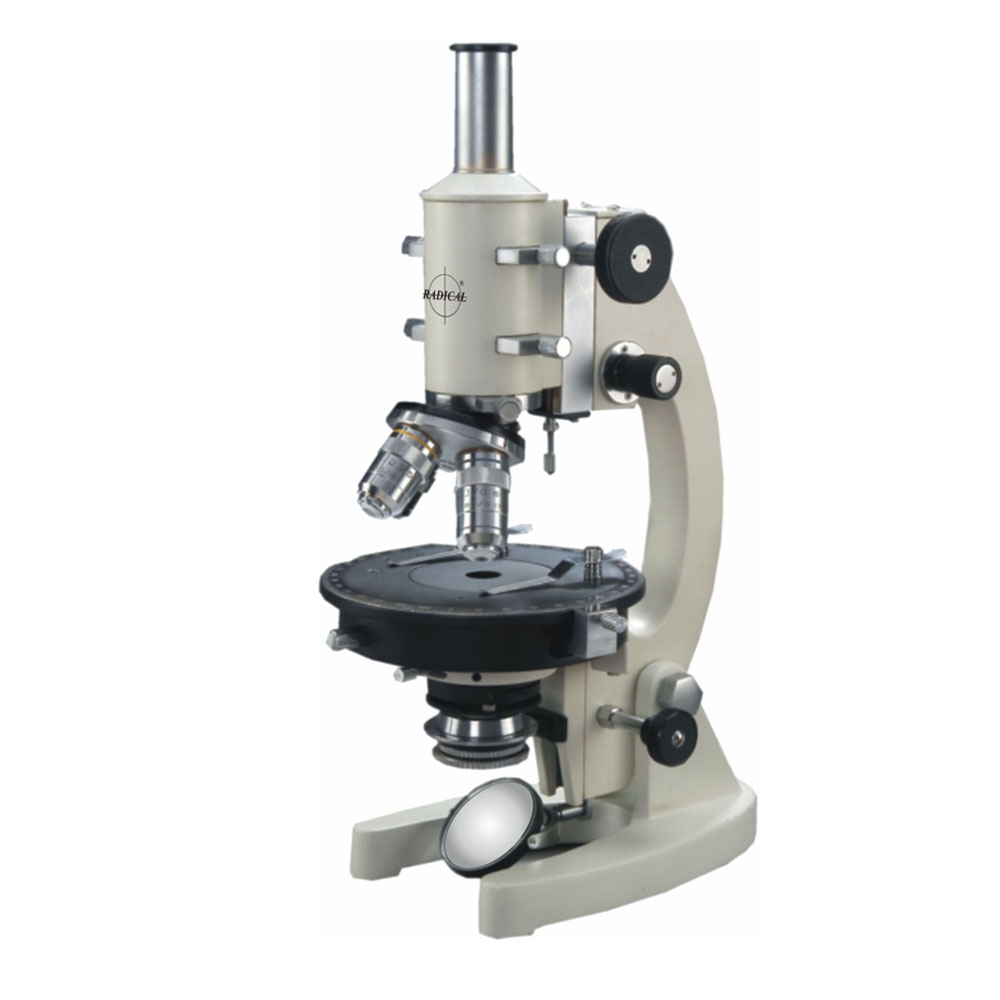
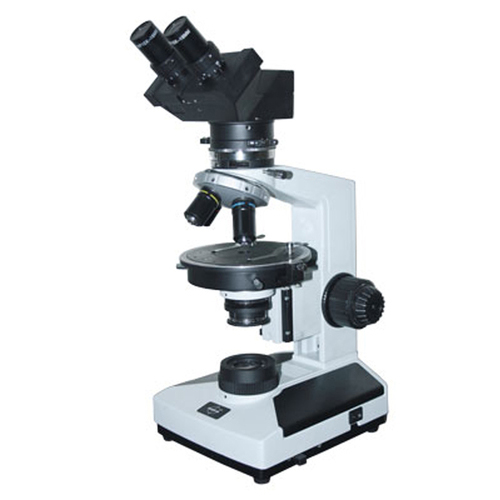
Trinocular Polarizing Light Microscope RPL-3T is a principal piece of equipment used to observe the optical properties of minerals and study of crystals with birefringence properties. Our microscopes have indispensable applications for Petrography, Crystallography and Geology in University Laboratories and in other environments where a reliable practical polarizing microscope is required for teaching purposes.
Stage -Compact ball-bearing rotating stage 140 mm diameter graduated with vernier lock and stage specimen clips.
Focussing -By vertical movement of stage coarse adjustment by rack pinion knobs and fine movement by screw-lever mechanism driven by screw-lever mechanism driven by graduated knobs.
Intermediate Tube -Built-in focussable Bertrand lens with center adjustable. Built-in analyzer removable from optical path. Analyzer can be rotated 90 deg with a vernier reading to 6 inch.
Eyepieces -Widefield Eyepieces WF-10x (Paired) and WF 10x with Cross
Advanced Polarizing Capabilities for Geological StudiesThe RPL-3T Polarizing Microscope delivers precise optical performance, making it ideal for analyzing thin sections of rocks and minerals. The trinocular view head supports both direct observation and digital imaging. This model's advanced polarizing features enhance contrast and differentiation of crystal structures, aiding professionals in petrography and crystallography applications.
Rugged Design and User-Friendly OperationBuilt from durable die-casting material and weighing 10 kg, the RPL-3T ensures stability during extended sessions. Manual coarse and fine rack pinion adjustments allow meticulous focusing, while the ergonomic trinocular design streamlines both imaging and observation workflows. The working stage accommodates a 140 mm2 area, supporting a variety of sample sizes.
Versatile Illumination and Power OptionsThis microscope provides the flexibility of LED or halogen illumination, supporting detailed studies in varying light conditions. Its 20W power requirement and 6V voltage compatibility make it suitable for diverse lab setups. The off-white finish and compact build allow for easy integration into educational, industrial, or research environments.
FAQ's of Polarizing Microscope RPL-3T:
Q: How do I operate the RPL-3T Polarizing Microscope for geological studies?
A: Operation is manual, involving coarse and fine rack pinion adjustments for focus, with sample placement on the 140 mm2 working stage. The trinocular drawtube allows both direct viewing and photographic imaging in JPEG format, ideal for geological and mineral analyses.
Q: What are the primary applications of this microscope?
A: The RPL-3T is primarily designed for petrography, crystallography, and geology. It's suitable for professionals and researchers studying rock, mineral structures, and crystal formations, offering high optical accuracy for thin section examination.
Q: When would using the trinocular head be beneficial?
A: The trinocular head is useful when simultaneous image capture and visual observation are required. This is especially beneficial during documentation of geological samples or when demonstrating findings during group studies or presentations.
Q: Where is the RPL-3T microscope manufactured and supplied?
A: This microscope is manufactured, distributed, exported, and supplied from India. It is available for purchase through reputable scientific equipment distributors and wholesalers.
Q: What power and illumination options does the RPL-3T offer?
A: The microscope operates on 20 Watt power and 6V voltage, offering both halogen and LED illumination sources. This versatility ensures clear imaging under various lighting conditions in laboratory and field settings.
Q: How are images recorded or documented using this microscope?
A: Images are recorded via the trinocular drawtube, which supports compatible camera setups and outputs images in JPEG format. This simplifies documentation, analysis, and sharing of specimen observations.
Q: What benefits does the die-cast construction provide?
A: Die-casting offers a robust and stable framework, ensuring the microscope remains reliable during prolonged usage. It also contributes to the instrument's longevity and precision, which are crucial for scientific research.



 English
 Spanish
 French
 German
 Italian
 Chinese (Simplified)
 Japanese
 Korean
 Arabic
 Portuguese
 08045479132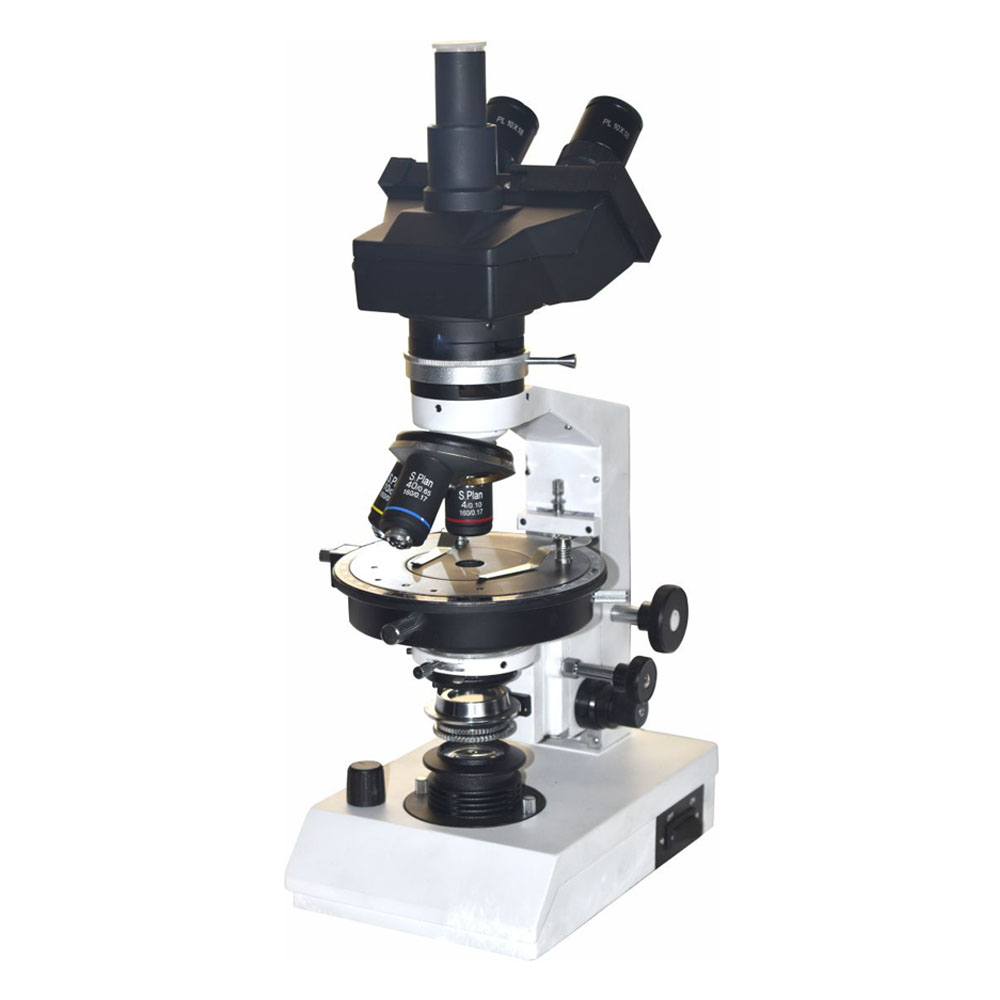



 Send Inquiry

 Send Inquiry
 Send SMS
