Product Description
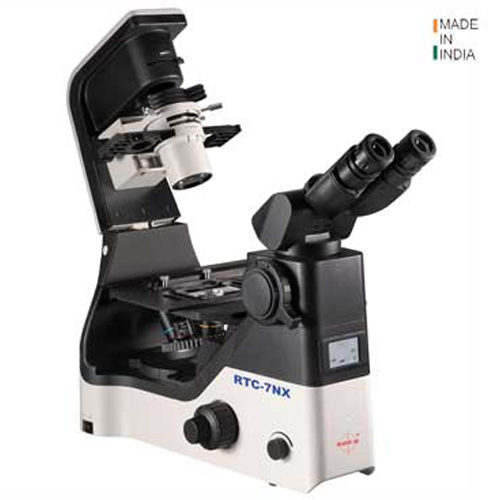
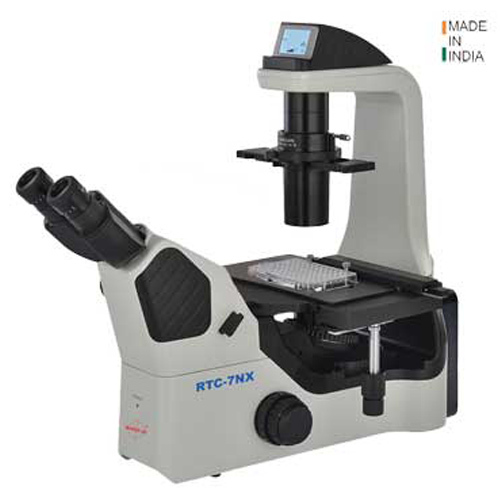
RTC-7NX with NIS60 is suitable for broad range of observation methods. Smaller body and improved ease of use will directly benefit research laboratories and improve workflow. In addition to conventional contrast, microscope is versatile in observation methods, including Phase Contrast, DIC,and Hoffman Modulation Contrast.
| Body | Rugged, ergonomic design, touch point treated |
| Optical system | Universal infinite optical system (IOS), colour corrected (CCIS), anti-fungal, anti-bacterial coated (multi-layered hard coated) |
| Illumination | Halogen/LED, intensity adjustable, battery backup, auto cut-off |
| Viewing Head | Ergonomic siedentopf Binocular/Trinocular head |
| Mechanical Stage | Fixed stage with 3-point support, hard coated surface, multiple stage inserts, detachable travelling stage with right/left hand control, low position coaxial movement |
| Objectives | LWD infinity semi plan/plan/flotar/S-APO/APO objectives |
| Condenser | LWD with iris diaphragm & filter slot brightfield, phase contrast |
| Nosepiece | Quadruple/quintuple/sextuple nosepiece with ball-bearing, rubber/metal grip & click stop |
| Eyepiece | Extra wide field, high point with diopter adjustment |
| Focusing | Feather touch ultra-precise coaxial (low position), both sides, coarse & fine with tension control & upper limit stopper |
| Motorized | Z-axis motorized focusing, motorized LED fluorescence |
| Ambient Temperature | 10-50 C |
| Storage Temperature | 0 - 50 C |
| Power Supply | 90V-240V/50Hz AC (SMPS) |
| Microscopy Techniques | Brightfield, fluorescence, phase contrast, Hoffman phase, 3D emboss contrast |
Precision and Clarity for Critical ResearchThe RTC-7NX model guarantees high-quality imaging essential for cellular and tissue observation. Its advanced inverted phase contrast capabilities enable clear visualization of live samples and complex specimens, benefiting both clinical diagnostics and advanced research.
Durable Construction with User Comfort in MindBuilt with robust MS material, the RTC-7NX is designed for longevity in demanding environments. The ergonomic binocular view head reduces eye strain during prolonged sessions, making it suitable for intensive hospital and laboratory applications.
FAQ's of Advanced Inverted Phase Microscope RTC-7NX:
Q: How does the Advanced Inverted Phase Microscope RTC-7NX improve laboratory and hospital workflows?
A: The RTC-7NX provides precise phase contrast imaging, simplifying the observation of living cells and intricate specimens. Its manual controls and ergonomic design facilitate smooth operation, leading to more efficient and reliable results for research and diagnostic purposes.
Q: What materials are used in the construction of the RTC-7NX microscope?
A: This microscope utilizes high-quality MS (Mild Steel) for its construction, ensuring enhanced durability and resistance to wear, suitable for rigorous use in hospitals and laboratories.
Q: When is the best time to use an inverted phase microscope like the RTC-7NX?
A: The RTC-7NX is ideally used when examining live cell cultures, observing organisms in liquid media, or analyzing thick specimens where traditional upright microscopes may not suffice. It is particularly useful for daily hospital diagnostics or research lab experiments.
Q: Where can I purchase or source the RTC-7NX microscope in India?
A: This model is available through various distribution channels, including direct purchase from manufacturers, suppliers, wholesalers, and exporters within India, ensuring broad accessibility for both public and private institutions.
Q: What is the process for operating the manual light source on the RTC-7NX?
A: The manual light source is operated by adjusting the controls located on the microscope's base. This allows the user to precisely manage illumination intensity, optimizing visibility according to the specimen and application requirements.
Q: How does the binocular view head benefit users during extended usage?
A: The binocular view head enhances comfort by allowing both eyes to be used during observation, significantly reducing eye fatigue and improving accuracy over lengthy examination sessions.



 English
 Spanish
 French
 German
 Italian
 Chinese (Simplified)
 Japanese
 Korean
 Arabic
 Portuguese
 08045479132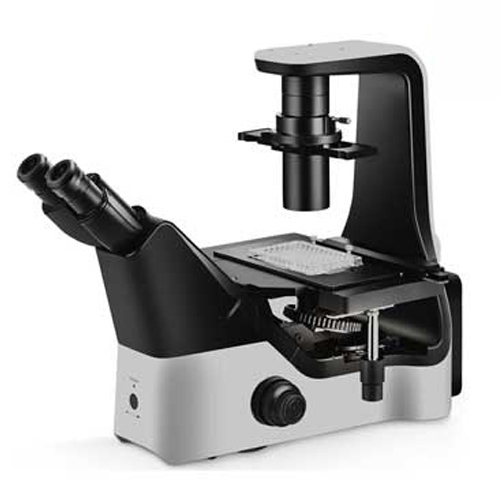




 Send Inquiry

 Send Inquiry
 Send SMS
 Call Me Free
